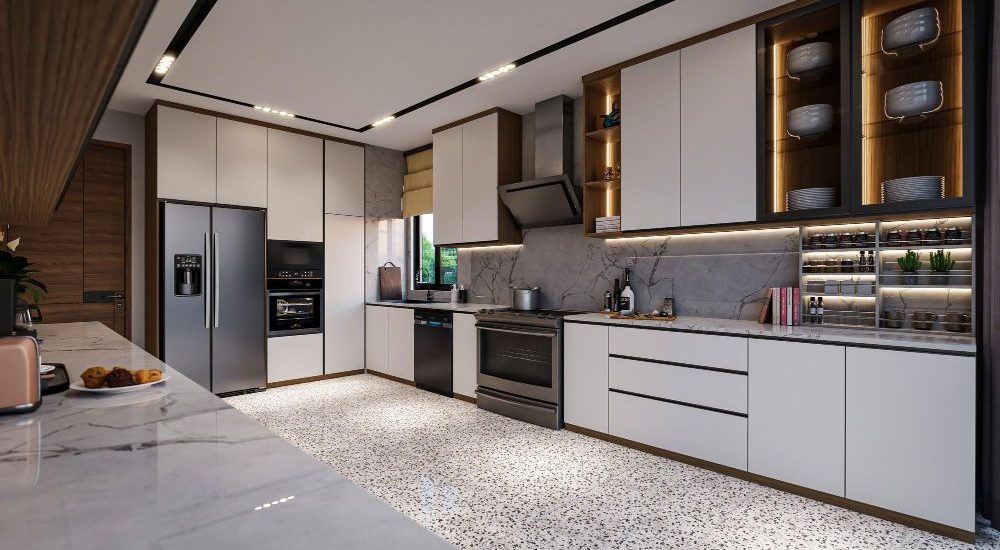

Lighting In Modular Kitchen! 7 Tips to Improve Your Kitchen’s Aesthetics!
Introduction
Lighting plays a pivotal role in the overall aesthetics and functionality of any space, and the kitchen is no exception. In the world of modular kitchen design, modular kitchens have gained immense popularity due to their sleek and organized appearance. To truly bring out your modular kitchen’s aesthetics, one must pay close attention to the lighting. In this blog, we’ll explore 10 practical tips to improve the lighting in your modular kitchen, ensuring it not only looks great but also serves its purpose efficiently.
Choose the Right Lighting Fixtures
Selecting the right lighting fixtures is the first step to achieving an aesthetically pleasing kitchen. Opt for fixtures that complement the overall design of your modular kitchen. Pendant lights, recessed lighting, and under-cabinet lighting are popular choices.
Points to Consider:
Functionality Matters: Think about how you use your kitchen. Dimmable lights offer versatility for different activities, from cooking to socializing.
Prioritize Energy Efficiency: Opt for energy-efficient options like LED lights to save on electricity bills and reduce environmental impact.
Consider Task Lighting
Task lighting is essential for areas where you work, such as the countertop and cooking area. Installing under-cabinet LED strips or focused pendant lights over the kitchen island can provide excellent task lighting, making meal preparation a comfortable task.
Points to Consider:
Choose Adjustable Fixtures: Opt for lights that you can adjust to direct light precisely where needed.
Minimize Glare: Position fixtures to avoid glare and shadows on your work surfaces. Experiment with placement for optimal illumination.
Utilize Natural Light
Whenever possible, maximize natural light in your kitchen. Make sure that windows are not obstructed by heavy curtains or furniture. Natural light not only brightens up the space but also creates a welcoming ambiance.
Points to Consider:
Window Coverings: Opt for light and sheer window coverings like blinds or translucent curtains. These allow natural light to filter through while still providing privacy.
Light-Colored Decor: Choose light-colored furniture, cabinets, and walls in your kitchen. Lighter colors help to reflect and amplify natural light, creating a brighter and more open feeling in the space.
Layer Your Lighting
Create depth and versatility by layering your kitchen lighting. Combine ambient, task, and accent lighting to achieve a well-balanced and aesthetically pleasing effect. This layering adds dimension to your kitchen.
Points to Consider:
Dimmer Switches: Install dimmer switches for your lighting fixtures. This allows you to adjust the brightness according to different needs and moods, from bright and functional for cooking to softer and cozier for dining or entertaining.
Use LED Strips for Accent Lighting: Consider adding LED strips under cabinets, shelves, or along architectural features. LED strips provide subtle accent lighting and can highlight specific areas of your kitchen, such as decorative displays or the backsplash.
Opt for LED Lights
LED lights are energy-efficient and long-lasting. They come in various color temperatures, allowing you to choose the one that suits your kitchen’s mood. Warm white LEDs can create a cozy atmosphere, while cool white LEDs provide a crisp, modern look.
Points to Consider:
High CRI Rating: Select LED lights with a high Color Rendering Index (CRI) to accurately display kitchen colors.
Lumens, Not Watts: Focus on lumens, not watts, to ensure the right brightness for your kitchen tasks.
Maintain Consistency
Maintaining consistency in the modular kitchen design and placement of lighting fixtures is crucial. Fixtures that are evenly spaced and aligned give a polished look. Consistency contributes significantly to the aesthetics of a modular kitchen.
Points to Consider:
Stick to a Style: Choose lighting fixtures that match the overall style of your kitchen. Whether it’s modern, traditional, or eclectic, consistent styling improves the look of your space.
Consider Lighting Zones: Divide your kitchen into lighting zones based on functionality, like cooking, dining, and prep areas. Each zone can have its consistent lighting theme, ensuring both uniformity and functionality.
Keep Safety in Mind
Lastly, make sure that your lighting installation is safe and complies with all electrical codes. Seek professional help if needed to avoid any potential hazards.
Points to Consider:
Avoid Overloading Circuits: Be mindful not to overload electrical circuits with too many lighting fixtures. Consult with an electrician to ensure your kitchen’s electrical system can handle the load safely.
Choose Heat-Resistant Fixtures: If your lighting fixtures are close to heat sources like stoves or ovens, select fixtures that are heat-resistant to prevent any fire hazards. Safety should always be a top priority in kitchen lighting design.
Conclusion
In conclusion, the lighting in your modular kitchen plays a pivotal role in enhancing its aesthetics and functionality. By following these 7 tips, you can transform your kitchen into a visually appealing and efficient space. From choosing the right fixtures to considering color temperature, these considerations will help you create the perfect lighting scheme for your modular kitchen. Remember, a well-lit kitchen is not only a joy to work in but also a delightful space for family gatherings and socializing. So, take the time to illuminate your kitchen effectively and enjoy the benefits it brings to your home.